PLM Services and iFLUX Join Forces in Strategic Partnership
We are excited to announce that PLM Services and iFLUX have joined hands in a strategic partnership that will revolutionize groundwater management...
3 min read
“With complex contamination, it is essential to take subsurface heterogeneity and dynamics seriously.”
Soil and groundwater contamination remains a major challenge for project developers, industrial players, and public authorities. Without a precise understanding of where contamination is located and how it spreads, there is a real risk of investing hundreds of thousands of euros in remediation efforts that deliver limited results.
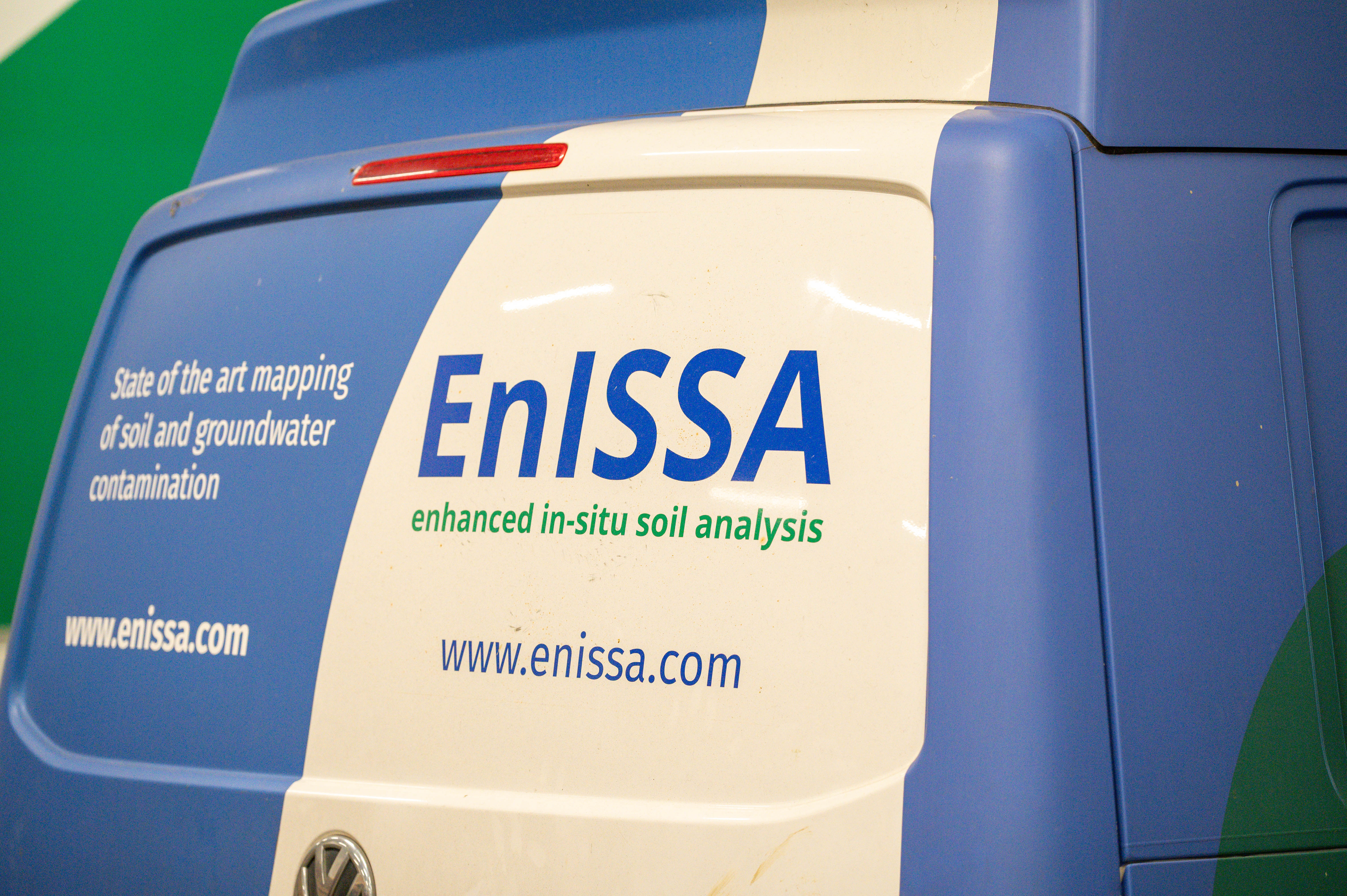
Two innovative Belgian companies provide exactly that clarity: EnISSA and iFLUX. Their technologies are highly complementary, and it is precisely this combination that creates significant added value for the market.
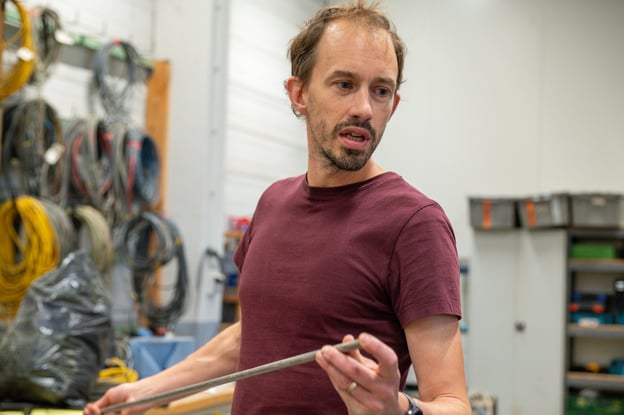
EnISSA specializes in High Resolution Site Characterisation (HRSC), mapping subsurface contamination layer by layer, down to tens of meters deep. iFLUX, in contrast, focuses on dynamics, measuring how much contamination is actually moving through the groundwater. Together, they provide a complete picture that is still too often missing today.
A conversation with Pieter Buffel (EnISSA) and Marjan Joris (iFLUX).
Pieter (EnISSA)
“The subsurface is highly complex, consisting of multiple layers — geological formations, thin sand layers, clay lenses, or loamy zones — all of which strongly influence groundwater flow and contaminant migration.
Contamination may appear limited at one meter depth, while being far more severe two meters deeper, for instance because denser-than-water contaminants sink or are guided by a clay layer. These nuances are often missed in conventional soil investigations.
If this complexity is not properly captured, the assessment is flawed from day one. In a single field campaign, EnISSA delivers an extremely detailed and reliable picture of both the source zone structure and plume dispersion.”
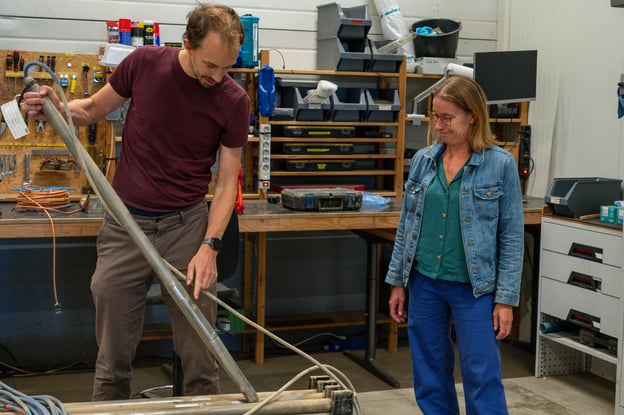
Marjan (iFLUX)
“Where EnISSA shows very precisely where contamination is located, we focus on what it does. We measure flux: how much contamination moves through the subsurface and at what velocity.
This allows you to distinguish between zones where contamination is retained and active sources feeding a plume. This is critical for risk assessment.
You cannot assess risk without measuring flux.
A high concentration with low flux may pose less risk than a lower concentration with high flux toward, for example, a drinking water abstraction.
Understanding contaminant behavior and risk is also essential when designing and sizing the most appropriate remediation strategy.”
Pieter
“Our high-resolution measurements clearly reveal the relationship between subsurface layering, the geometry of the source zone, and the specific fine layers where contaminant migration occurs.”
Marjan
“Thanks to EnISSA, we know exactly, for example, that contamination is located between 7.8 and 8.4 meters, in a very specific sand layer. We can then position our flux samplers precisely in that layer and truly quantify what is moving through it.
Flux campaigns can be repeated over time in existing monitoring wells, allowing us to assess:
This turns remediation into a controlled process rather than a blind operation.”
Pieter
“With our HRSC techniques, a team spends about a week on site and collects a vast amount of data. The key advantage is real-time feedback. Based on the first soundings, the strategy can be adjusted immediately — deeper, shallower, laterally, or constrained by a clay lens. This avoids months of delays between drilling campaigns, sampling, and lab results.”
Marjan
“In addition, we can monitor dynamics over time. There is no need for new drilling, and remediation performance can be verified or adjusted in time. This makes the overall process faster and more cost-efficient.”
Pieter
“Too many investigations still follow the mindset of ‘a few wells, a few samples, and done’. With complex contamination, however, it is crucial to take subsurface heterogeneity seriously.
"We need more experts who are willing to deviate from standard recipes and explain that investing more upfront in proper investigation saves multiples in remediation costs later on.”
Marjan Joris
“It is also important to clearly explain to end clients the risks of ‘cheap’ investigations. Saving a few thousand euros during the investigation phase can easily lead to remediation budgets with several extra zeros.
If the foundation is wrong, remediation rarely goes according to plan and sites often need to be revisited. That story must be clearly communicated.”
“End clients often see remediation purely as a cost. The reflex is therefore to do the minimum. In reality, what they want most is certainty:
The EnISSA–iFLUX combination provides exactly that clarity from the outset: this is the problem, this is the strategy, this is the timeline.”
Marjan
“I see strong potential in the characterization of PFAS-contaminated sites. We have already collaborated several times in this area and can present some compelling cases.
EnISSA characterizes geology and preferential flow paths, while we measure PFAS fluxes and migration with our samplers.”
“I also see opportunities in long-term monitoring. Today, some remediation projects run for ten years without a clear understanding of what has actually changed. This can be done better.”
Pieter
“I strongly believe in a more integrated approach: first HRSC screening, then targeted flux measurements, followed by a jointly developed remediation and monitoring strategy. One coherent story for the client, rather than fragmented techniques and advice.
In short:
first know where the contamination is, then measure what is moving — and only then remediate.”
We are excited to announce that PLM Services and iFLUX have joined hands in a strategic partnership that will revolutionize groundwater management...
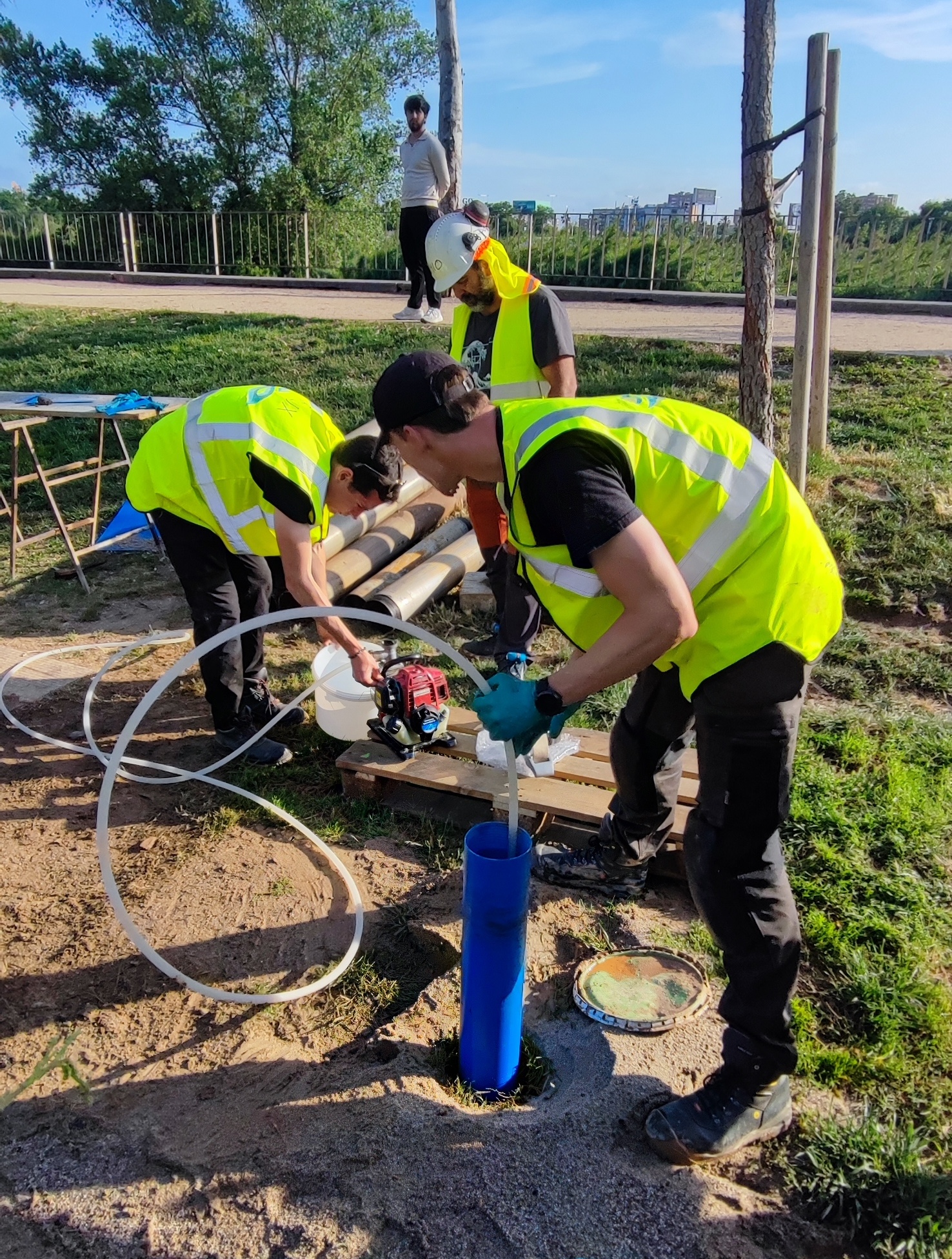
In May, iFLUX reached an important international milestone with the installation of its very first flux sensors in Spain. The project takes place in...
.jpg)
Campus Vesta, located in the province of Antwerp, is home to one of the most ambitious PFAS remediation experiments in Europe. Together with...