
3 min read
Why iFLUX & EnISSA Together Make the Difference in Soil Remediation
“With complex contamination, it is essential to take subsurface heterogeneity and dynamics seriously.” Soil and groundwater contamination...
2 min read
.jpg)
Campus Vesta, located in the province of Antwerp, is home to one of the most ambitious PFAS remediation experiments in Europe. Together with C-biotech and a consortium of national and international partners, including VITO, Inagro, Antea Group, DEME, OVAM, KIS, and iFLUX, the site is being transformed into a living lab where hemp is being used to pull PFAS contamination out of both the soil and groundwater.
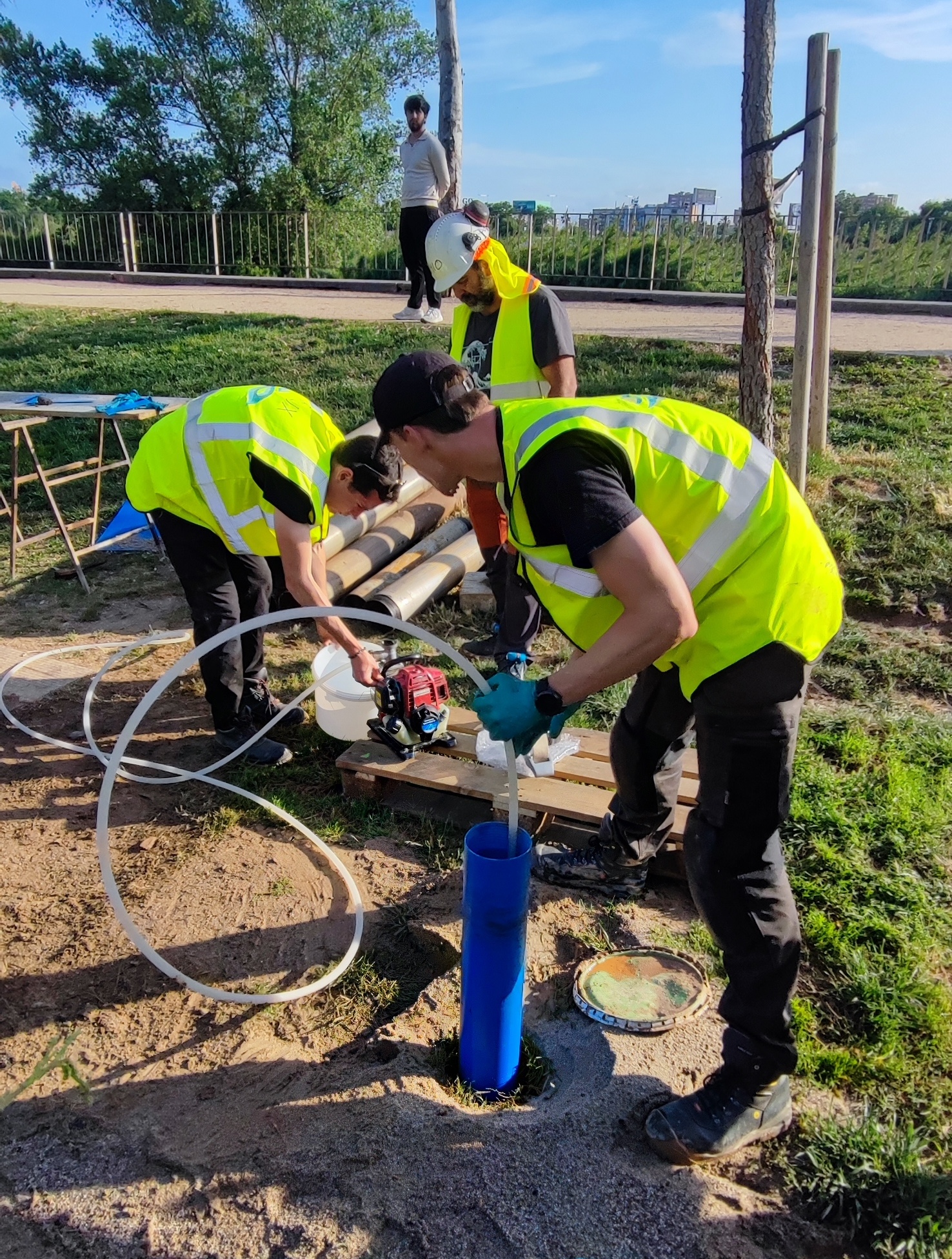
This week, the iFLUX team was on-site installing the groundwater monitoring infrastructure that will underpin the entire project. Specifically, we were installing piezometer tubes - the casings that house our flux sensors - to measure how groundwater moves through the contaminated area.
Different types of sensors are going into the ground:
Flux sensors track the direction and movement of groundwater: where it comes from, where it's heading, and where potential hotspots of contamination may still be lurking. Since PFAS contamination has already been found at multiple locations around the test field, understanding the flow of polluted groundwater is critical to mapping the full picture.
Pressure sensors monitoring groundwater levels to assess whether hemp cultivation influences groundwater dynamics, and conversely, whether varying water table depths affect plant growth or PFAS uptake.
.jpg?width=538&height=358&name=Vesta%20Campus%20Installation%20(12%20van%2012).jpg) Soil moisture sensors are equally important: soil moisture is directly linked to how effectively the plants can take up PFAS. The drier or wetter the soil, the more it affects the plant's ability to absorb contaminants, making this a key parameter for evaluating the phytoremediation process.
Soil moisture sensors are equally important: soil moisture is directly linked to how effectively the plants can take up PFAS. The drier or wetter the soil, the more it affects the plant's ability to absorb contaminants, making this a key parameter for evaluating the phytoremediation process.
The boreholes were drilled manually, first using an Edelman auger to advance through the upper layers, then switching to pulse drilling once groundwater was reached. The tubes themselves go down to approximately 7 metres depth.
.jpg?width=354&height=236&name=Vesta%20Campus%20Installation%20(28%20van%2039).jpg) The choice of manual drilling - and pulse drilling in particular - was deliberate. The subsurface at Campus Vesta contains glauconite, a mineral that is sensitive to mechanical disturbance. Sonic drilling, which spins at high frequency, would pulverise the glauconite and alter the natural soil structure. Pulse drilling avoids this, preserving the integrity of the original ground conditions and ensuring the monitoring data reflects reality rather than a disturbed environment.
The choice of manual drilling - and pulse drilling in particular - was deliberate. The subsurface at Campus Vesta contains glauconite, a mineral that is sensitive to mechanical disturbance. Sonic drilling, which spins at high frequency, would pulverise the glauconite and alter the natural soil structure. Pulse drilling avoids this, preserving the integrity of the original ground conditions and ensuring the monitoring data reflects reality rather than a disturbed environment.
All data is aggregated in a central dashboard, providing real-time access that allows experts to remotely monitor and consult findings from their desks. Together, we will evaluate which data points are essential for gaining a comprehensive understanding of PFAS uptake in hemp.
The sensors being installed form the backbone of the project's monitoring network. Without accurate data on groundwater flow and soil moisture, it would be impossible to assess whether the hemp is doing the job, or to identify where contaminated water is still migrating.
With the support of Vlaanderen / OVAM / vzw Kenniscentrum Innovatieve Saneringstechnieken (KIS)


3 min read
“With complex contamination, it is essential to take subsurface heterogeneity and dynamics seriously.” Soil and groundwater contamination...
In May, iFLUX reached an important international milestone with the installation of its very first flux sensors in Spain. The project takes place in...
PFAS has emerged as one of the most challenging environmental contaminants of our time, with its complexity only expected to grow in the coming...